


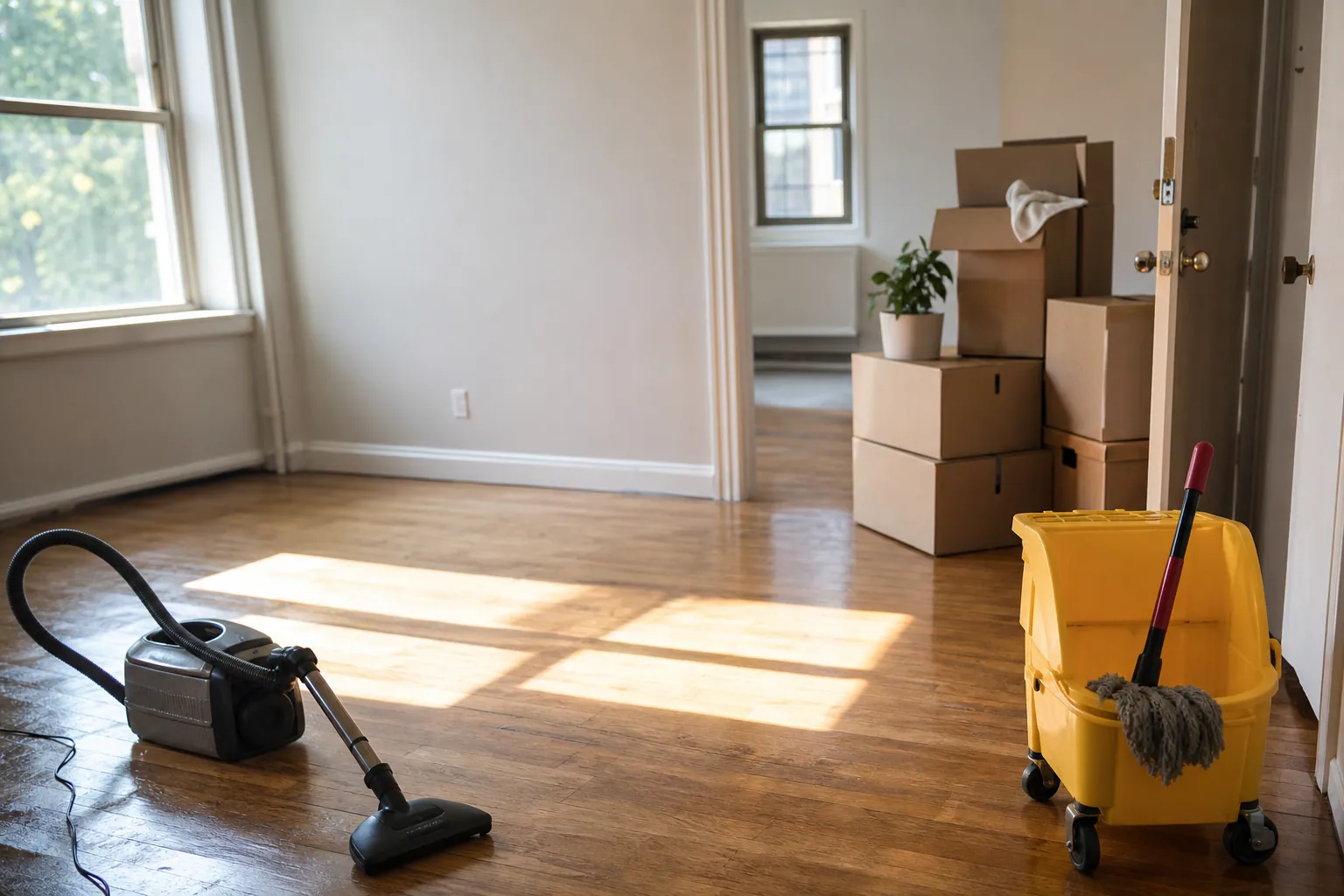
Security deposits typically run one month's rent — $1,200 to $2,500 in most US metros in 2026 — and cleaning charges are the single most common reason tenants don't get all of it back. The good news: landlords can only deduct for actual cleaning and damage beyond normal wear and tear, and the items they flag are surprisingly predictable.
This guide covers what fails final walkthroughs room by room, what deductions actually cost, and the carpet-receipt clause buried in many leases. It ends with the honest math on when to clean it yourself and when to pay for a turnover clean.
Landlords and property managers work from a checklist, and the same items show up on deduction statements over and over. They're almost always the spots you stopped seeing years ago — the ones your eyes skip because they've looked that way since year one.
One distinction worth knowing before you start: normal wear and tear — faded paint, carpet worn in traffic lanes, a few small nail holes — is not deductible in any state. Dirt, grease, and damage are. If your time is short, spend it on the kitchen and bathrooms, which drive most cleaning deductions.
When a landlord hires out the cleaning and bills your deposit, you pay retail rates with zero say in the vendor. Most states require an itemized statement within 14 to 30 days of move-out, and deductions must reflect real costs — a flat, nonrefundable 'cleaning fee' is illegal in several states. Here's what typical line items look like on 2026 statements:
Many leases require 'professional carpet cleaning' at move-out and a receipt to prove it — meaning an invoice from a company, not a rented machine. If yours does, a $40 grocery-store rental won't satisfy the clause, and the landlord can have the carpets cleaned again at your expense.
Read the clause before deciding how to handle it. Professional hot-water extraction for a two-bedroom apartment runs about $120–$250 in 2026, usually less than the per-room rate a landlord passes through after the fact.
Two caveats: a few states restrict landlords from requiring routine carpet cleaning when there's no actual soiling, and some only allow it if the carpets were professionally cleaned before you moved in. If the clause is enforceable where you live, though, the receipt is cheap insurance.
DIY makes sense when the unit is small, you kept up with cleaning during the tenancy, and you have a full day plus supplies — roughly $50 worth if you're starting from scratch. A studio or one-bedroom in decent shape is a realistic solo project.
Hiring wins when the math flips. A professional move-out clean for a two-bedroom runs $300–$550 in 2026; if your deposit is $2,000 and the unit hasn't had a deep clean in three years, that trade favors you heavily. It also wins on the genuinely hard parts — baked-on oven grime, range-hood degreasing, hard-water buildup, stained grout — which take specialty products and hours of scrubbing, and are exactly what a licensed professional like Acme Cleaning handles as routine work.
Either way, schedule the cleaning for after your furniture is out, since cleaning around boxes guarantees missed spots. And if you're hiring, book a week or two ahead — end-of-month turnover slots fill fast.
Cleaning is half the job; documentation is the other half. If a deduction later shows up that doesn't match your evidence, dispute it in writing and cite your state's deadline — landlords who blow that deadline can owe the full deposit back, and in some states two or three times it.
Before you hand back the keys: